NutriBac

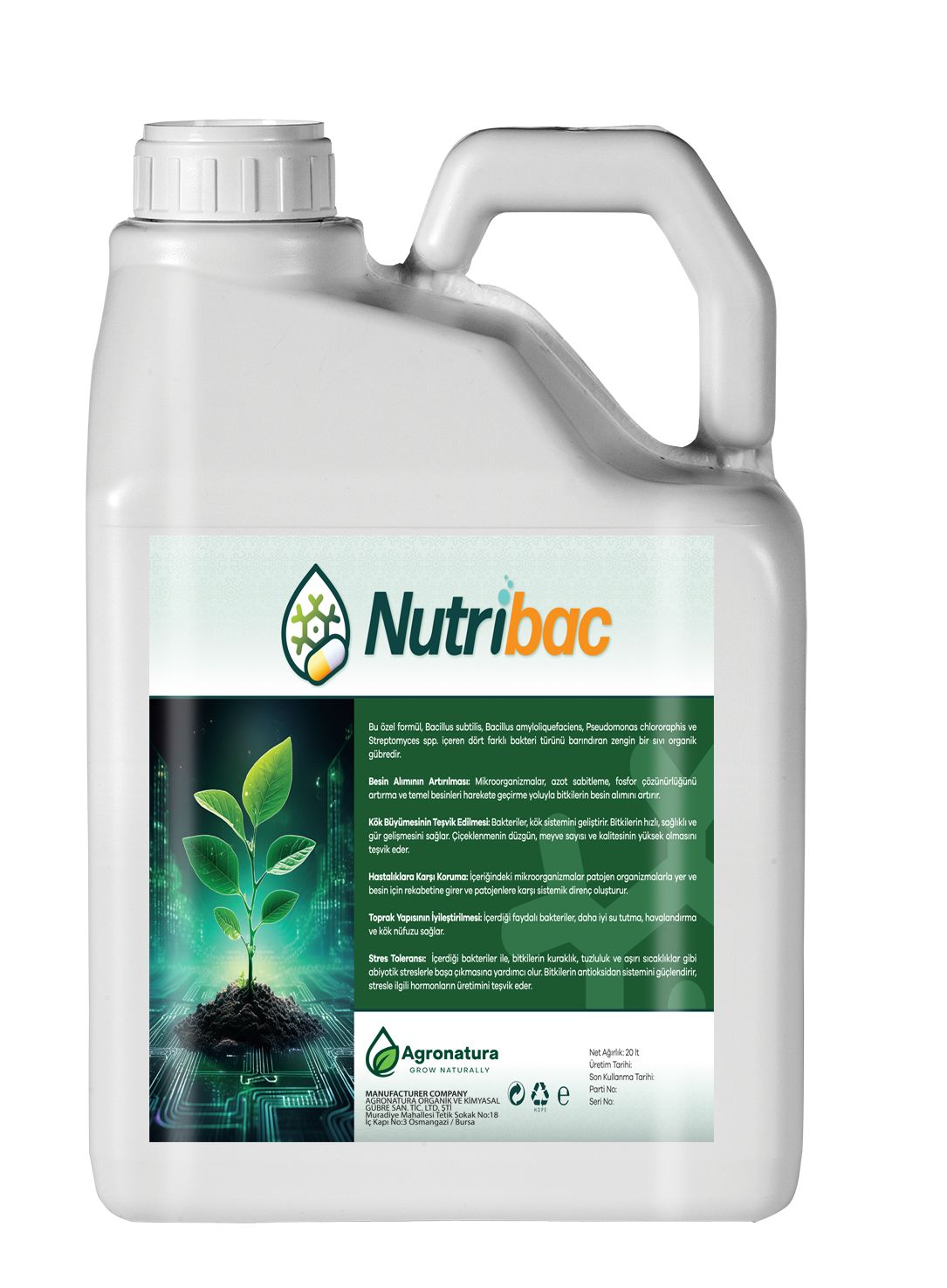
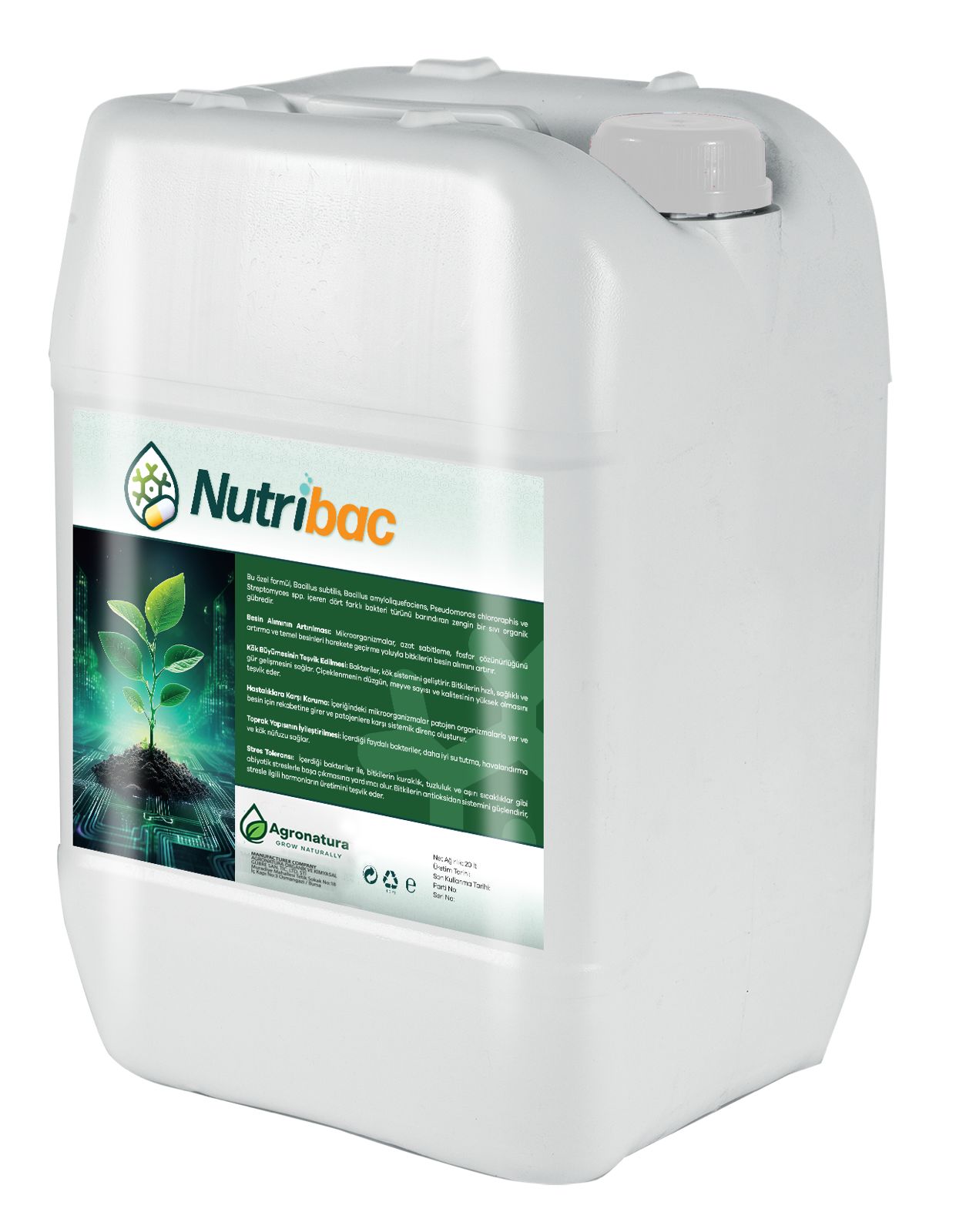
Nutribac is a soil microbial fertilizer containing beneficial microorganisms developed to increase phosphorus solubility available to plants in agricultural production. The following microorganisms are present:
• Pseudomonas fluorescens
• Pseudomonas putida
• Bacillus subtilis
• Streptomyces sp.
Each bacterial species is present in the product at an amount of 10⁶ cfu/ml.

Innovative solutions for agriculture growth and soil health.
Our success depends on customers' success, so we are committed to building long lasting partnerships based on trust, collaboration, and foster true sustainable growth.
Get Started Now info@agronatura.com.tr
Download Brochure

NutriBac

Ingredients:

Nutribac is a soil microbial fertilizer containing beneficial microorganisms developed to increase phosphorus solubility available to plants in agricultural production. The following microorganisms are present:

 Pseudomonas fluorescens

 Pseudomonas putida

 Bacillus subtilis

 Streptomyces sp.

Each bacterial species is present in the product at an amount of 10⁶ cfu/ml.
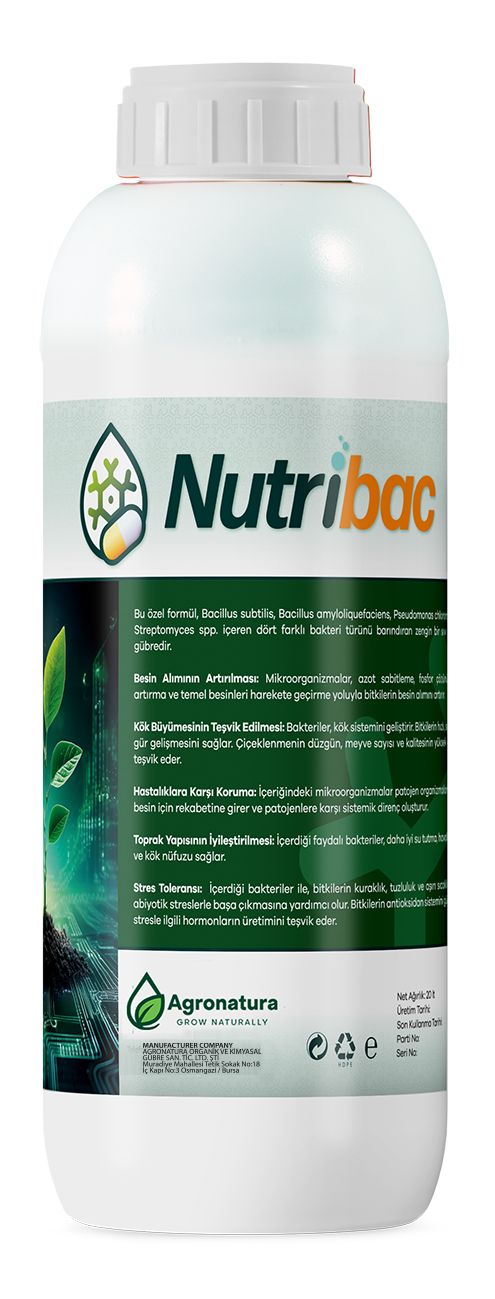
This proprietary formula is a rich liquid organic fertilizer containing four different bacterial strains: Bacillus subtilis, Bacillus amyloliquefaciens, Pseudomonas chlororaphis, and Streptomyces spp. These microorganisms interact beneficially with the soil and plant, enhancing plant growth and health, and boosting yields.

Key Benefits:

  • Increased Nutrient Uptake: Microorganisms increase plant nutrient uptake by fixing nitrogen, increasing phosphorus solubility, and mobilizing essential nutrients.
  • Stimulates Root Growth: Bacteria produce natural hormones that stimulate root growth and branching. This enhances the root system. This enhanced root system allows the plant to take in more nutrients and water, thus supporting overall growth and increased yield. It promotes rapid, healthy, and lush plant development. It promotes proper flowering and high fruit yield and quality. • Disease Protection: Streptomyces spp., which produce natural metabolites, increase plant resistance to diseases. They compete with pathogenic organisms for space and nutrients, produce antimicrobial compounds, and create systemic resistance in plants against pathogens.
  • Soil Structure Improvement: The beneficial bacteria it contains play a critical role in soil aggregation. By producing substances such as polysaccharides and glomalin, they help hold soil particles together, improving soil structure. This leads to better water retention, aeration, and root penetration.
  • Stress Tolerance: It offers properties that help plants cope with abiotic stresses. The bacteria it contains help plants cope with abiotic stresses such as drought, salinity, and extreme temperatures. It strengthens the plant’s antioxidant system, promotes the production of stress-related hormones, and increases plant resilience to stress conditions by altering the osmotic balance within plant cells.